
A real scene runtime
ViewerRuntime gives the 3D surface a clear lifecycle and a place for the scene to live.
- ↳Babylon.js renderer
- ↳camera control
- ↳lighting and shadows
havn systems · spatial renderer
A renderer that turns the same documents into a live 3D scene.
A focused visual runtime for seeing, selecting, and navigating spatial material without owning the document model.
@havn-earth/viewer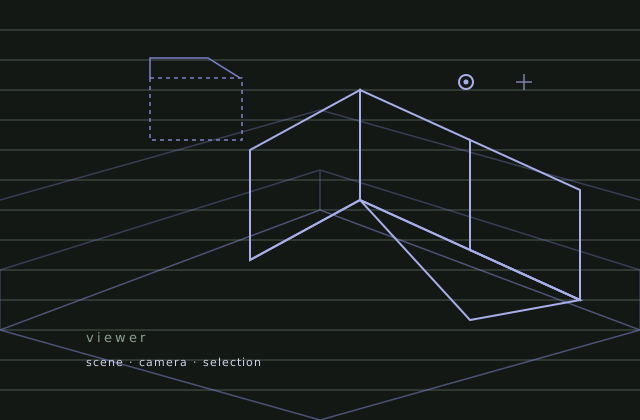
It does not own the truth. It renders what the system says is there, keeping scene concerns separate from collaboration, memory, and authoring.
See it in the architectureWhen rendering logic becomes the document model, every camera decision becomes a product decision. Scenes get difficult to test, and other surfaces have to speak in renderer-specific terms.
Viewer keeps the relationship clean: give it a document, geometry, and intent; it gives back a scene people can see and manipulate.
A runtime built around camera, lighting, shadows, selection, and spatial feedback.
Rendering stays a consumer, so the system can change the view without rewriting the material.
Snapping, selection, and caching make the scene useful for thinking, not just looking.
ViewerRuntime gives the 3D surface a clear lifecycle and a place for the scene to live.
Spatial interaction points back to shared identity instead of trapping meaning inside the viewport.
Geometry caching and focused responsibilities help the visual layer stay responsive as the material grows.
Every surface in Havn has a job in the loop. This one keeps its responsibility clear, then hands the work to the layer that comes next.
Take the shared document and geometry contracts.
Place the material in a scene people can navigate.
Select, snap, and move through what is there.
Send intent back without taking ownership of the source.
Viewer is useful because it has a precise relationship with the other layers. Follow the handoffs and the product gets easier to understand.
Viewer is the focused scene layer in a system that keeps rendering, memory, and authoring in conversation.