
Extract what is there
Turn raw material into structured signals without asking the author to pre-organize everything.
- ↳multimodal extraction
- ↳metadata and entities
- ↳material-aware indexing
havn systems · memory substrate
The layer that makes a canvas queryable in plain language.
Put anything on the canvas, then ask it anything about what you put there.
@havn-earth/knowing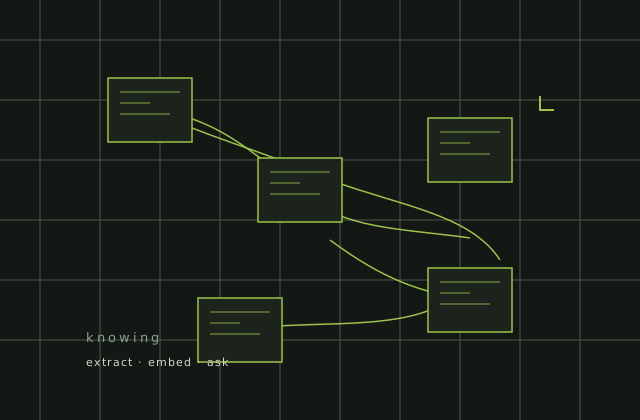
The first wedge is deliberately practical: local extraction, embeddings, hybrid search, and a bridge back to the board. Meaning stays attached to the material instead of disappearing into a separate chat.
See it in the architectureMessy projects are full of useful context, but the context is scattered across folders, tabs, screenshots, and half-finished notes. The cost is not only finding a file; it is reconstructing why it mattered.
Knowing makes retrieval part of the canvas. The system can inspect what is there, keep the relationships, and answer from the material you actually supplied.
Text, images, and project material can share one searchable context.
BM25 and vector search work together without turning your workspace into a black box.
The answer can lead back to the board and the source material that made it useful.
Turn raw material into structured signals without asking the author to pre-organize everything.
Combine lexical precision with semantic similarity for questions that are specific and fuzzy at once.
The board remains the place where memory becomes useful and action can begin.
Every surface in Havn has a job in the loop. This one keeps its responsibility clear, then hands the work to the layer that comes next.
Bring the material into the canvas and keep it together.
Extract the signals that make the material addressable.
Use plain language to query the context you created.
Return to the material with enough context to move.
Knowing is useful because it has a precise relationship with the other layers. Follow the handoffs and the product gets easier to understand.
The human-facing surface where material is placed, arranged, and questioned.
Extends the substrate with structural and semantic memory for projects and agents.
Provides shared contracts and local compute paths for material-aware work.
Knowing is the wedge into the larger Havn vision: a workspace that helps you think with the material you already have.